
Home / Development

Defense · Aerospace · Space

Development Capabilities

The K2 platform is in concept-stage development. Each version is designed to expand capability while maintaining architectural integrity.

K2 V3 · Multi-Planetary Infrastructure

Programmable Structural Composite in Action

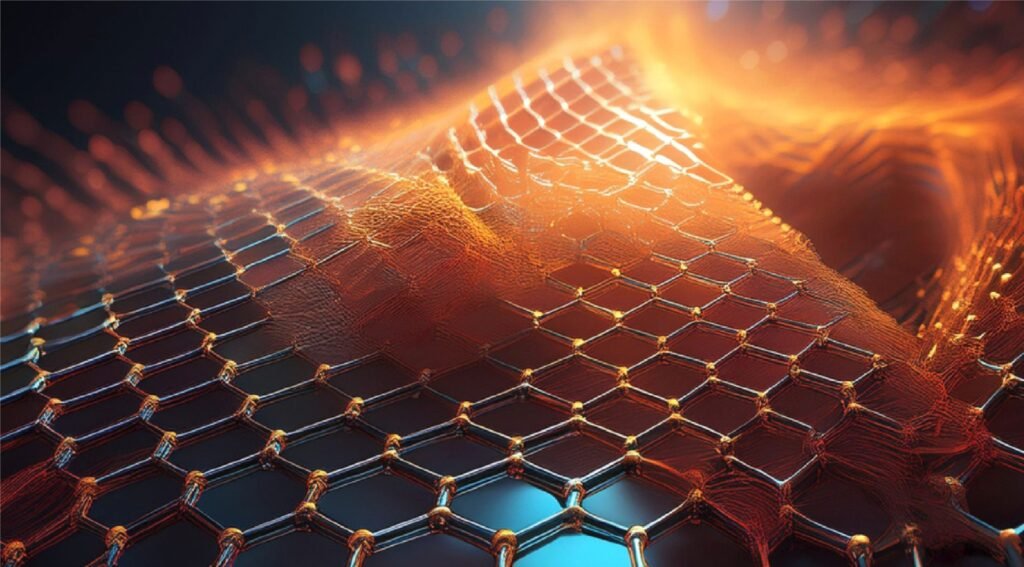
Conceptual visualization of K2 V3 colony-scale architecture — integrated material systems engineered for long-duration deployment beyond Earth.

K2v3 Web Animation — Colony-scale structural composite concept · Kaliber Systems Corp
Architecture

Platform Structure Hierarchy

System performance is defined by architecture, not individual layers. Each module integrates at the material level, not as an external addition.

01

Architecture over isolated material properties

02

Material-level integration, not bolt-on subsystems

03

Staged validation before capability expansion

Staged Development

K2 Platform Versions

Each version is designed to expand capability while maintaining architectural integrity — progressing through staged concept development.

K2 V1

Structural

Establishes the baseline structural composite architecture. It integrates layered high-strength materials designed for kinetic energy dispersion, impact resistance, and multi-environment structural stability.

This version focuses on:

  • Load distribution
  • Fracture resistance
  • Kinetic energy dissipation
  • Structural survivability under extreme stress

K2 V1 defines the intended structural foundation upon which future functional layers are designed to build.
K2 V2

Structural + Thermal

Designed to build upon the structural foundation defined in V1 by integrating active and passive thermal management architectures.

This version introduces:

  • Controlled heat dispersion pathways
  • Thermal load redistribution
  • Energy harvesting from thermal gradients
  • Integrated conductive networks within the structural lattice

K2 V2 transitions the platform from purely structural to thermally responsive.

K2 V3

Multi-Spectrum Environmental

K2 V3 expands the platform into multi-spectrum environmental interaction. In addition to structural and thermal capability, this version incorporates:

  • Radiation management and directional energy pathways
  • Controlled electromagnetic response
  • Integrated energy harvesting from high-energy radiation environments
  • Electrodynamic structural functionality

K2 V3 transforms the composite from a passive structural system into an active environmental interface platform.

System performance is determined by architectural integration, not isolated material properties. Each version is planned to build on prior stage definitions to expand functional capability without compromising integrity.

Functional Layers

Integrated System Capabilities

Cross-cutting capabilities embedded within the K2 composite architecture — not added as external subsystems.

01

Thermal Management

Active thermal control and heat distribution across the structural lattice.

02

Radiation Management & Directed Energy Pathways

Directional energy routing and radiation-aware configuration for harsh environments.

03

Thermal Gradient & Energy Harvesting Networks

Energy capture and redistribution from thermal differentials within the material.

04

Electromagnetic Field Control & Conductive Architecture

Integrated electromagnetic response and embedded conductive pathways.

K2 Roadmap

Architecture Stack

Staged capability expansion from structural core through multi-spectrum environmental systems.

K2 platform architecture diagram
K2 V1

Structural Core Architecture

  • Kinetic dispersion lattice
  • High-strength layered composite foundation
  • Load distribution and fracture resistance
K2 V2

Integrated Thermal & Energy Architecture

  • Embedded thermal gradient control
  • Heat redistribution pathways
  • Energy harvesting from thermal differentials
  • Embedded electrical pathways within material structure
K2 V3

Multi-Spectrum Environmental Architecture

  • Radiation management and directional energy routing
  • Embedded electrodynamic conductive lattice
  • Integrated electromagnetic response
  • Mission-optimized structural configuration
K2 V4

Future Integrations

Next-stage platform expansion planned to build on the V1–V3 architecture.

Configuration Modules

Platform Structure Hierarchy

Modular configuration layers — one required foundation with mission-specific optional integrations at the material level.

  • Required — foundation for every configuration
  • Optional — mission-specific capability layers

Optional integrations

02 Optional

Exterior Interaction Integration

Mission-specific outer layer for customized environmental interaction.

03 Optional

Radiation Configuration Integration

Integrated radiation mitigation for space and high-radiation environments.

04 Optional

Integrated Pathway Integration

Embedded conductive pathways and thermal management systems.

Builds upon prior stage definition

Required foundation

01 Required

Primary Structural Assembly

Core structural and kinetic dispersion architecture. Foundation for all configurations — every mission profile begins here.

Technical Review

K2 Multi-Functional Programmable Structural Composite

Concept White Paper — Concept Stage / Pre-Prototype Development

Prepared by Kaliber Systems Corp. Program focus: next-generation monolithic multifunctional structural composites for defense, aerospace, and extreme-environment applications.

Executive Summary

K2 is a monolithic, multifunctional structural composite being developed to unify load-bearing performance, impact tolerance, thermal management, radiation resilience, energy-management capability, and signature control within a single bonded material architecture. Unlike conventional systems that depend on separate armor packages, thermal barriers, stealth coatings, and externally applied survivability solutions, K2 is intended to embed these functions directly into the structure itself.

This approach reflects a departure from the conventional subsystem model of survivability engineering. In legacy platforms, structural function, thermal protection, electromagnetic signature management, and environmental resilience are generally treated as separate engineering problems addressed by separate materials and separate integration steps. K2 is being developed from the premise that these functions can be consolidated into one continuous material body whose internal functional regions are engineered for distinct operational purposes while remaining part of one bonded whole.

The result is not a passive composite. It is a structurally unified material system designed to manage how kinetic, thermal, radiative, and electromagnetic energy enters, propagates through, and exits the structure. K2 therefore represents more than an incremental improvement in composite performance — it represents a candidate foundation for a new class of programmable structural materials in which protection, persistence, and capability are materially integrated rather than externally added.

1. Strategic Need

The future defense environment is defined by convergence. Platforms must now withstand not only mechanical loads and structural fatigue, but also ballistic and blast threats, thermal extremes, directed-energy exposure, abrasive environments, persistent sensing, radiation, and long-duration degradation in austere conditions.

At the same time, system designers are under constant pressure to reduce mass, simplify integration, improve maintenance burdens, and preserve mission capability after repeated stress events.

Conventional materials engineering addresses these demands sequentially. One material carries load. Another resists heat, another reduces radar signature, another provides environmental shielding. The result is a layered dependency on multiple subsystems, each introducing integration burden, interface vulnerability, mass penalties, and long-term maintenance complexity.

K2 is being developed in response to this limitation. Its central premise is that survivability should no longer be treated as a patchwork of externally added solutions. Instead, survivability functions should be embedded into the structure itself as part of a unified materials architecture.

2. K2 Concept Definition

K2 is a monolithic, functionally differentiated structural composite. Its internal regions are engineered for distinct operational purposes while remaining part of one continuous bonded material body.

Depending on mission requirements, K2 may be configured to emphasize one or more of the following functions:

  • Structural load-bearing continuity
  • Kinetic impact distribution and multi-hit persistence
  • Thermal buffering, spreading, or rejection
  • Radiation mitigation and environmental resilience
  • Energy routing or harvesting pathways
  • Electromagnetic signature control and return-field shaping
  • Embedded sensing or response networks
  • Self-healing or damage-arrest mechanisms

The significance of this architecture lies in the fact that the structure is no longer merely the object being protected. The structure becomes part of the protection, sensing, and survivability logic itself.

3. Core Technical Thesis

The technical thesis behind K2 is that structural materials can be engineered to do more than resist external stress. They can be engineered to manage the flow of energy through the structure and alter the consequences of threat interaction.

In this framework, survivability is not limited to avoiding penetration or fracture. It also includes:

  • Controlling how impact loads propagate through the body
  • Limiting crack growth and preserving residual strength
  • Redistributing thermal stress before catastrophic weakening occurs
  • Mitigating cumulative environmental degradation
  • Altering electromagnetic return behavior to reduce classification confidence
  • Maintaining useful post-hit performance under repeated multi-domain stress
4. Technical Architecture and Functional Regions

The technical architecture of K2 is based on functionally differentiated internal regions within one structurally continuous composite body.

4.1 Structural Domain

Provides stiffness, toughness, continuity, and mechanical integrity under operational and threat conditions.

4.2 Kinetic-Energy Management Domain

Intended to distribute, absorb, redirect, and localize damage from ballistic, blast, fragment, repeated-strike, or micrometeoroid events.

4.3 Thermal and Directed-Energy Management Domain

Governs how heat enters, spreads through, and exits the structure under transient high-flux conditions.

4.4 Radiation and Environmental Resilience Domain

Addresses long-duration degradation from UV exposure, radiation, dust abrasion, corrosive chemistry, and thermal cycling.

4.5 Electromagnetic Signature Management Domain

Influences how electromagnetic energy interacts with the structure — including impedance control, phase delay, scattering modification, and return-field reshaping.

5. Survivability Logic

K2 is being developed around an expanded survivability model that addresses survivability as a sequence:

  • Absorb, redirect, or distribute incoming threat energy
  • Prevent local overload from becoming system-level failure
  • Preserve useful post-event function
  • Slow cumulative degradation under repeated exposure
  • Maintain operational relevance after multiple threat interactions

A particularly important hypothesis within K2 is that certain buried CNT-mediated carbon junction regions may, under repeated extreme loading, develop localized sp2/sp3-hardened nodes in areas of highest stress concentration — potentially improving crack resistance, local hardness, load transfer, and damage tolerance in critical zones.

6. Signature Management and Return-Field Engineering

Conventional low-observable approaches focus on reducing returned signal strength. K2 proposes a broader concept: return-field engineering.

In this model, survivability against advanced sensing is not limited to making a platform appear smaller. It may also involve making the platform appear different from what it is by altering the statistical, spectral, phase, temporal, or angular character of the returned field.

The objective is not solely attenuation, but signature corruption, displacement, disguise, or misclassification.

7. Mission Configurability

K2 is not intended as a single fixed material recipe. It is a mission-configurable structural architecture whose internal functional priorities may be adjusted during fabrication according to application and end-user requirement.

  • Higher thermal and environmental resilience for extreme-temperature or long-duration platforms
  • Greater kinetic-energy dispersion and crack-arrest behavior for armor-intensive applications
  • Stronger signature-control functionality for low-observable or sensor-deception missions
  • Enhanced radiation resilience and impact persistence for extraterrestrial structures
  • Emphasis on embedded energy-management or sensing pathways where mission systems benefit from native structural integration
8. Representative DoD Use Cases

Ground Systems

Armored vehicles, survivable unmanned ground systems, mobile shelters, hardened infrastructure, and protective structures expected to endure repeated kinetic and thermal stress.

Aerospace Systems

Survivable aircraft structures, persistent ISR platforms, high-performance unmanned systems, thermally stressed aerospace structures, and mission-critical components where weight, observability, and resilience must be balanced simultaneously.

Space and Cislunar Systems

Habitat structures, protective panels, long-duration spacecraft components, autonomous infrastructure, and remote-environment systems where radiation, thermal cycling, and micrometeoroid persistence dominate material lifetime.

Expeditionary and Persistent Infrastructure

Rapidly deployable shelters, hardened field systems, energy-protective enclosures, and long-life installations in austere environments.

9. Development Roadmap and Validation Strategy

Because K2 represents a new materials architecture rather than a conventional single-property composite, development should proceed through staged validation:

  1. Stage 1: Fabrication and Structural Integrity Validation
  2. Stage 2: Isolated Functional-Domain Testing
  3. Stage 3: Cross-Domain Interaction Testing
  4. Stage 4: Microstructural Evolution Validation
  5. Stage 5: Subsystem-Scale Demonstration
  6. Stage 6: Mission-Relevant Testing

This staged approach provides both technical discipline and programmatic credibility, allowing K2 to demonstrate increasing maturity without requiring premature claims that exceed available validation.

10. Programmatic Significance

K2’s significance lies in the possibility of a new survivability doctrine. Most current platforms still rely on separate materials and external subsystems for structure, armor, heat control, environmental resilience, and observability management.

K2 proposes a different model: build those functions into the structure itself. If successful, this would establish a new class of monolithic multifunctional structural media in which survivability, persistence, and platform capability are integrated from inception.

11. Conclusion

K2 is being developed as a monolithic multifunctional structural composite intended to unify structural performance, impact tolerance, thermal control, environmental resilience, radiation mitigation, energy-management capability, and signature engineering within one bonded material body.

Its central premise is not that it marginally improves one property in isolation. Its promise is that it may reduce the need to treat structure, protection, and survivability as separate engineering categories at all.

By embedding mission-specific functionality into a continuous structural architecture, K2 seeks to move beyond the traditional model of stacked subsystems toward a new model of integrated material capability. In that model, the structure is no longer just the host for survivability systems. The structure becomes the survivability system.

Frequently Asked Questions

Development & Partnership

Common questions about engaging with Kaliber Systems on K2 platform development and validation programs.

What types of programs can partner with Kaliber Systems, and how quickly can we start?

Contact our team at info@kalibersys.com to discuss defense, aerospace, or space program requirements, engagement models, and onboarding timelines for development partnerships.

How does Kaliber Systems ensure quality across development milestones?

We apply rigorous validation, systems-first engineering practices, and structured program governance aligned with defense and aerospace standards at each K2 platform stage.

What is the minimum engagement scope, and how flexible is the partnership model?

Engagement terms are tailored to program scope and lifecycle requirements. Reach out to discuss flexible partnership structures from validation pilots to full platform integration.

How does Kaliber Systems manage risk across staged platform development?

We work closely with partners through defined milestones, deliverables, and review cycles — each K2 stage advances through disciplined concept development before capability expansion.

Collaborate

Have a cool idea?
Let’s collaborate.

Partner with Kaliber Systems to advance programmable structural materials for defense, aerospace, and space.